
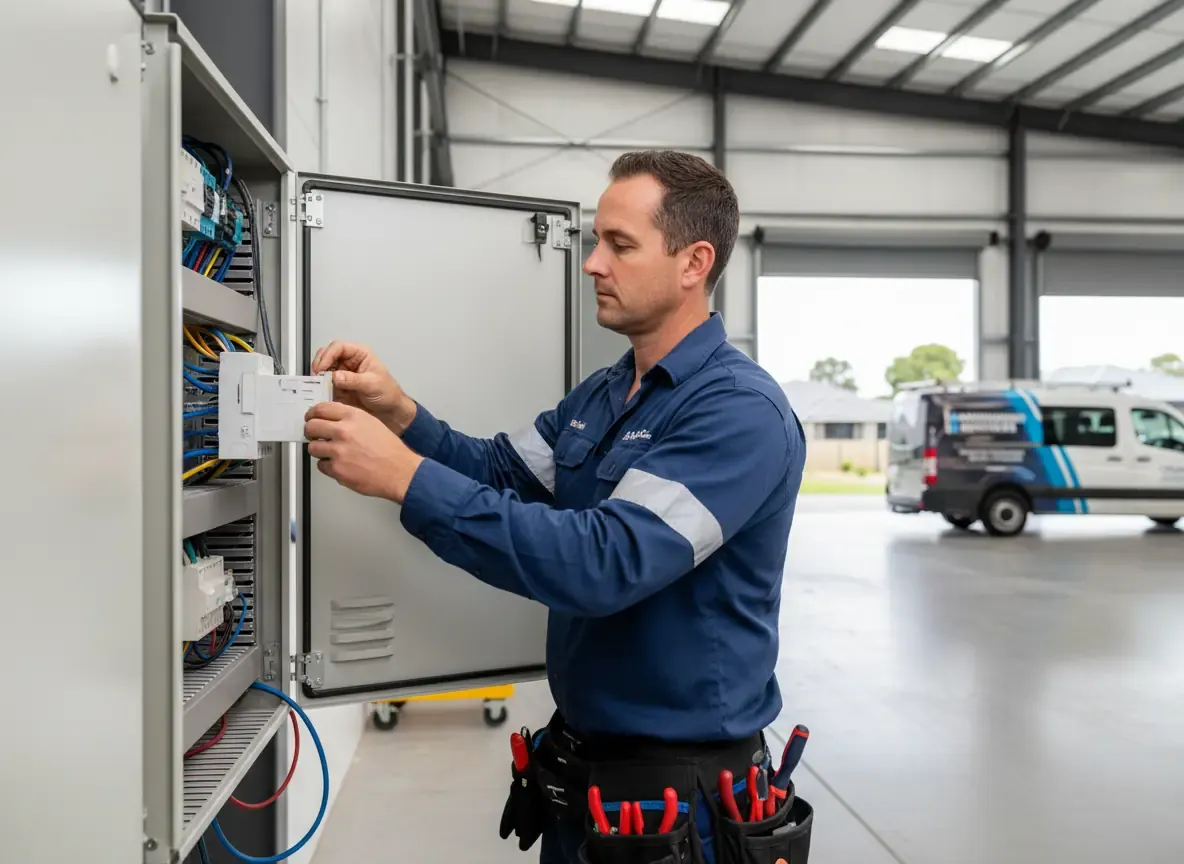
Understand Safety switch installation
A safety switch (RCD) watches the current on a circuit and cuts power quickly when some leaks away, such as through a person or a faulty appliance. Older Dandenong homes often have one on power points only, leaving lights and other circuits unprotected. Installation brings every circuit under that protection.
Why Safety switches trip
A trip means the switch has sensed leakage and done its job. Common causes include a failing appliance, moisture in an outdoor power point or light fitting, damaged cable, or several appliances on one circuit adding up small leaks. Less often, the safety switch itself has worn out and trips without a genuine fault.
Faulty switch or faulty appliance: the decision
Unplug everything on the affected circuit and reset the switch. If it holds, plug items back in one at a time; the one that sets it off is likely the culprit. If it trips with nothing connected, the problem sits in fixed wiring, a fitting or the switch, and that needs licensed professionals.
When nuisance tripping points to a fault
Trips after rain, at the same time each day, or whenever one appliance starts form a pattern worth recording. Leaving the switch off or shifting appliances to another circuit only hides the fault. If you notice a burning smell, heat or sparking at the board, stay clear and call 000 if there is fire or immediate danger.
Do you need a whole new switchboard?
Not always. Where the existing board has room and is in sound condition, safety switches can often be added to it. An older fuse board with no spare space or signs of heat damage usually makes a switchboard upgrade the more sensible path. Energy Safe Victoria publishes safety switch guidance for households that is worth a read.
Next step for Safety switch protection
Write down which circuits trip, what was running, the time and the weather, and whether the switch resets. With the notes in hand, request a quote here for the safety switch work; a licensed and insured local contractor can follow up. Before then, check your board for test buttons to see which circuits already have a safety switch.
What safety switch installation can cover
Adding RCD protection to unprotected circuits
Fitting safety switches so lighting, power and other circuits that currently have no RCD are covered.
Nuisance tripping fault finding
Tracing why a safety switch keeps cutting out, whether the cause is an appliance, a damp fitting, damaged cable or the switch.
Faulty safety switch replacement
Replacing a safety switch that trips with no load connected or fails its test, then retesting the circuit.